Ask an adult who never misses a dental cleaning where that came from, and the answer is almost always the same. It’s what their family did growing up. It never occurred to them to do otherwise.
That’s the real opportunity of the early years. You’re not just keeping your child’s teeth clean today, you’re setting a default that will run on its own for the next several decades. At Sweet Tooth Kids Dentistry in Downers Grove, we think of it as the most valuable thing we help families build.
Start Before the First Tooth
Oral care can begin before there’s anything to brush. Wiping your baby’s gums with a soft, damp cloth after feedings keeps the mouth clean and, just as usefully, gets your child accustomed to having their mouth cared for by someone else.
That familiarity pays off later. A baby who’s used to a cloth accepts a toothbrush more easily, and a toddler who’s used to a toothbrush puts up less of a fight at their first dental visit.
Twice a Day, Every Day
Two minutes, morning and night. That’s the whole prescription.
The part parents often get wrong is stopping supervision too soon. Young children simply don’t have the fine motor control to brush effectively, no matter how confidently they insist otherwise. A useful benchmark: if your child can’t yet tie their own shoes, they still need you brushing or closely supervising.
Consistency is what turns this from a task into a habit. A routine that happens every single night without negotiation becomes automatic. One that happens most nights stays a negotiation for years.
Add Flossing Early
Once two teeth touch, floss can reach where a brush can’t. Those contact points between teeth are exactly where cavities like to start, and they’re invisible until there’s a problem.
Introducing flossing early has a subtle benefit beyond the cleaning itself. A child who’s always flossed considers it a normal part of the routine. A child who has it added at age ten experiences it as a new chore, and treats it accordingly.
Eating Habits Matter as Much as Brushing
What goes into your child’s mouth shapes their dental health as much as what you do afterward:
- Make water the default drink, with juice and sweet beverages as occasional treats.
- Watch sticky and sugary snacks, which cling to teeth long after the snack is over.
- Pay attention to grazing. This one surprises parents: continuous snacking is harder on teeth than the same amount of food eaten at set times, because teeth never get a break to recover between acid exposures.
- Offer cheese, crunchy vegetables, and fruit alongside meals.
What Actually Causes Cavities
It’s worth understanding the mechanism, because it makes the habits above make a lot more sense.
Cavities aren’t caused by sugar directly. They’re caused by bacteria that live in the mouth, feed on sugars and starches, and produce acid as a byproduct. That acid softens enamel. Given enough time between exposures, saliva neutralizes the acid and the enamel recovers. Given constant exposure, it doesn’t get the chance.
This explains two things parents often find puzzling. It’s why frequent grazing is harder on teeth than a single dessert, and it’s why a bottle or sippy cup at bedtime is such a concern, since saliva production drops during sleep and the teeth sit in sugar for hours with no defense.
One more piece surprises most families: those bacteria aren’t present at birth. They’re typically passed to children from caregivers, often through shared spoons or cups. Keeping your own dental health in good order genuinely benefits your child’s.
Keep It Positive
Habits built through pressure tend to collapse the moment the pressure lifts, usually somewhere around adolescence. Habits built through routine and good feeling tend to stick.
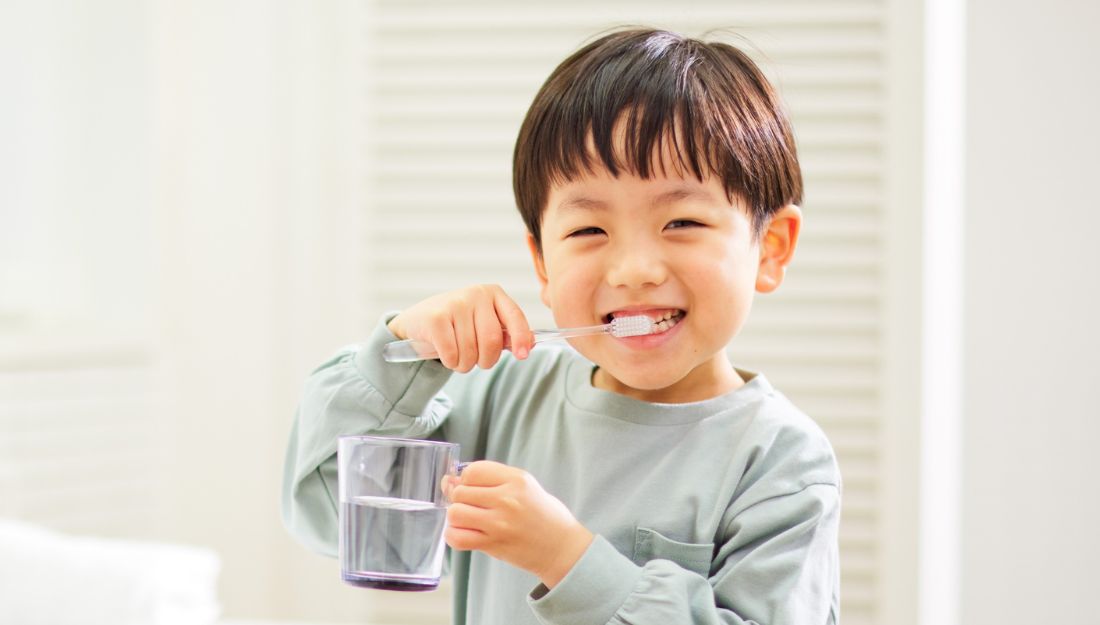
Small things help more than you’d expect. Letting your child choose their own toothbrush gives them ownership. A two-minute song makes the timing concrete instead of abstract. Brushing alongside them turns a chore into something you do together.
When It Stops Working
Nearly every family hits a stretch where a child who brushed happily for a year suddenly refuses. This is normal, and it’s usually about autonomy rather than about teeth.
Try offering small choices inside the non-negotiable, such as which toothbrush or whether to brush before or after pajamas. Keep the routine short and predictable. Stay patient, since a power struggle at bedtime rarely ends well for anyone.
What matters is not letting a rough few weeks quietly become the new normal.
Make Dental Visits Routine
Regular visits, starting around your child’s first birthday, do more than catch problems early. They make the dental office an ordinary place.
A child who has been coming since before they can remember has no reason to be anxious about it. That comfort is genuinely protective, because adults who avoid the dentist out of fear almost always trace it back to childhood.
Let the Habits Grow Up Too
What works for a toddler won’t work for a fifth grader. In the toddler years you’re doing most of the work. By school age, your child takes on more of the brushing while you supervise and handle flossing. By the tween years, the goal is genuine independence, with your role reduced to encouragement and the occasional reminder.
Handing over responsibility gradually is what makes it stick once you’re no longer in the room.
Your Own Habits Are Part of This
Children notice more than we give them credit for. They see whether you floss. They notice whether you dread your own appointments or treat them as unremarkable.
You can tell a child that dental care matters, but what they’ll actually absorb is what they watch you do.
Give Your Child a Lifetime of Healthy Smiles in Downers Grove
The routines you build now will likely outlast anything else you teach them this year. If you have questions about caring for your child’s teeth, or it’s time for their next visit, the team at Sweet Tooth Kids Dentistry in Downers Grove is here to help. Reach out to schedule an appointment whenever you’re ready.