If your child’s dentist has mentioned a palatal expander, you probably have questions. What does it do? Does it hurt? How long will my child wear it? These are some of the most common questions parents ask, and the answers are reassuring.
At Sweet Tooth Kids Dentistry in Downers Grove, Dr. Jamie Moss uses palatal expanders to help growing children whose upper jaw is too narrow. This guide explains what an expander is, which kids benefit, and what everyday life with one looks like for your family.
What a Palatal Expander Does
The roof of the mouth, called the palate, is made of two halves of bone joined down the middle by a seam. In young children, that seam hasn’t fully fused yet. That means the upper jaw can still be gently widened.
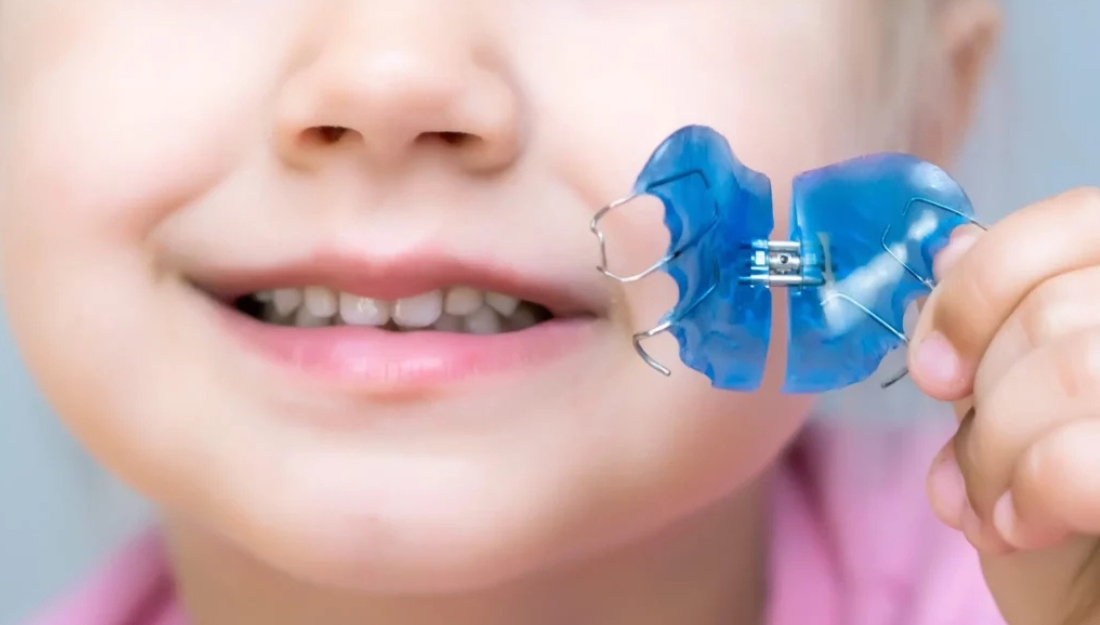
A palatal expander is a small appliance that fits against the roof of the mouth and attaches to the upper back teeth. In the center is a tiny screw. Turning that screw a small amount on a set schedule applies gentle, steady pressure that encourages the two halves of the palate to move apart. New bone fills in the space as the jaw widens.
Because it works with natural growth, timing matters. Expansion is most effective while a child’s jaw is still developing, which is why it’s usually recommended in childhood rather than later.
Signs a Child May Benefit From an Expander
A narrow upper jaw can show up in a few different ways. Some are easy for parents to notice, and others are found during a dental exam:
- Crossbite: When your child bites down, some upper back teeth sit inside the lower teeth instead of outside them.
- Crowding: Permanent teeth may not have enough room to come in straight.
- A high, narrow palate: The roof of the mouth looks tall and V-shaped.
- Mouth breathing: A narrow upper jaw is linked with a narrower nasal floor, and some children breathe through their mouths, especially at night.
- Jaw shifting: The lower jaw slides to one side to make the teeth fit together.
Not every child with one of these signs needs an expander. An exam and, often, X-rays help Dr. Moss decide whether expansion is the right step.
Why Early Treatment Helps
Correcting a narrow upper jaw while a child is still growing can make a real difference. A crossbite that’s left alone can lead to uneven wear on the teeth and a jaw that grows off-center. Widening the jaw can make room for permanent teeth to come in, which may reduce crowding later.
Treating the problem at the right age also tends to be simpler. Once the seam in the palate fuses in the teen years, widening the upper jaw becomes much harder.
Getting the Expander
The first step is a set of impressions or scans so the expander can be custom-made for your child’s mouth. At the next visit, the appliance is fitted and attached to the upper back teeth. This visit is usually quick, and most kids find it easier than they expected.
We’ll show you how to turn the expander using a small key, how often to do it, and what to look for. Most parents feel comfortable after a practice turn or two in the office.
The First Few Days
Expect an adjustment period. During the first several days, your child may notice:
- A feeling of pressure in the upper jaw, teeth, or even around the nose after a turn
- Extra saliva while the mouth gets used to the appliance
- Slightly different speech, especially with “s” sounds
- Food catching around the appliance
These usually settle within a week or two. Soft foods help in the first few days, and a children’s pain reliever can ease pressure if needed. Many parents find that turning the expander at bedtime lets their child sleep through the brief pressure.
The Gap Between the Front Teeth
One thing that surprises many parents is a gap that opens between the two upper front teeth during expansion. This is a good sign. It shows the two halves of the palate are moving apart as planned. The gap often closes on its own over the following weeks as the teeth drift back together.
Daily Life With an Expander
Eating. Your child can eat most foods, but some are best avoided. Sticky candy, gum, caramel, and hard foods like ice, nuts, and hard pretzels can bend or loosen the appliance. Cutting food into smaller pieces makes chewing easier.
Cleaning. Food collects around expanders, so good cleaning is important. Have your child brush carefully around the appliance after meals, and rinse with water to flush out bits of food. A water flosser can help reach under the expander. Healthy teeth during treatment mean fewer cavities to deal with later.
School and activities. Most kids adjust quickly and go about their normal routines. If your child plays contact sports, ask us about a mouthguard that fits comfortably with the appliance.
How Long Treatment Lasts
The active turning phase typically lasts a few weeks. After that, the expander stays in place, without turning, for several months while new bone fills in and stabilizes the wider jaw. Dr. Moss will check progress at each visit and let you know when it’s time to remove it.
Will My Child Need More Treatment Later?
Some children need nothing more after expansion. For others, widening the jaw is the first step, and their teeth may benefit from further evaluation as permanent teeth come in. Dr. Moss will keep an eye on your child’s growth at regular checkups and let you know if anything else is worth considering.
When to Call Us
Call our office if the expander feels loose, a piece breaks, your child has pain that doesn’t ease with a pain reliever, or the gums around the appliance look swollen or irritated. Small problems are easy to fix when we see them early.
Palatal Expanders at Sweet Tooth Kids Dentistry in Downers Grove
A palatal expander is a simple, proven way to guide a child’s jaw as it grows. Dr. Jamie Moss is a children’s dentist who focuses on care for kids and teens, and our team will walk your family through every step so you know what to expect. Call (630) 984-8811 to schedule an exam at our Downers Grove office.
Related: Read Is Thumb Sucking Bad for My Child’s Teeth? A Downers Grove Parent’s Guide.